Thursday, August 2, 2018

Wells Fargo to pay $2.09 billion fine in mortgage settlement

Wells Fargo has agreed to pay a $2.09 billion fine for issuing mortgage loans it knew contained incorrect income information, the Justice Department announced Wednesday.

The government said this activity contributed to the financial crisis.

"Today's agreement holds Wells Fargo responsible for originating and selling tens of thousands of loans that were packaged into securities and subsequently defaulted," Alex Tse, acting US Attorney for the Northern District of California, said in a statement.

Wells Fargo is not admitting liability as part of the settlement.

In a statement, Wells Fargo said it "remains focused on [its] important role as one of the nation's leading providers of mortgage financing."

"We are pleased to put behind us these legacy issues regarding claims related to residential mortgage-backed securities activities that occurred more than a decade ago," Wells Fargo CEO Tim Sloan said.

The bank pointed out that the Justice Department has previously reached settlement agreements with other banks over similar issues, and that "importantly, there were no claims that individual customers were harmed as a result of the alleged conduct."

The government alleges that between 2005 and 2007, Wells Fargo knew many of its home loans were based on misstated income details and misrepresented their quality.

Investors, including federally-insured financial institutions, ultimately lost billions of dollars from investing in mortgage-backed securities that contained Wells Fargo loans, according to the Justice Department.

The fine is the latest bit of bad publicity for Wells Fargo, which has had a lot of it recently.

A wave of controversies, kicked off by the fake-accounts scandal, has damaged Wells Fargo's reputation, raised its legal expenses and drawn attention from regulators.

The bank is spending heavily to try to win back the trust of customers. It recently launched an expensive ad campaign on television, radio and online.

All the controversies have hurt Wells Fargo's bottom line.

Profit, loans, deposits and revenue all shrank last quarter, the bank said last month.

Wednesday, August 1, 2018

Mark Andrew Bringloe Acquires 15,000 Shares of Anexo Group PLC (ANX) Stock

Anexo Group PLC (LON:ANX) insider Mark Andrew Bringloe purchased 15,000 shares of Anexo Group stock in a transaction that occurred on Thursday, July 19th. The stock was acquired at an average cost of GBX 112 ($1.48) per share, with a total value of 拢16,800 ($22,236.93).

LON ANX opened at GBX 113 ($1.50) on Friday.

Get Anexo Group alerts:

Anexo Group Company Profile

Anexo Group plc provides integrated credit hire and legal services for the non-fault motorists in the United Kingdom. The company operates through two divisions, Credit Hire and Legal Services. It offers an integrated end to end service to the customer, including the provision of a credit hire vehicle, upfront settlement of repair and recovery charges, management and recovery of costs, and processing of associated personal injury claim.

Recommended Story: How do investors use RSI to grade stocks?

Tuesday, July 31, 2018

Got an IRS Letter? Here's What to Do

When you filed your tax return back in April, you probably figured you were done with IRS matters for the year. But if anything on your return raised a red flag, now's the time when you might receive a letter from the IRS alerting you to a potential problem.

Your first inclination upon hearing from the IRS might be to panic. But rather than stress yourself out needlessly, here's what you should do instead.

1. Read the letter carefully

Most of the time, if the IRS has a problem with your tax return, it's due to a specific issue. Maybe you transposed some numbers on your return that resulted in an error.

For example, say you received a 1099 form stating you collected $2,430 in income from a given company last year. If you accidentally reported that income as $2,340, your taxable income will be $90 shy, so the IRS might send a letter along those lines since it receives copies of all 1099 forms. In that case, all you'd need to do is agree to that change, pay whatever small tax amount it results in, and move on with your life.

Man holding a piece of paper with panicked expression

IMAGE SOURCE: GETTY IMAGES.

Generally speaking, when you get a letter from the IRS, it will contain specific instructions as to what the agency is looking for or what action you need to take. As long as you take the time to understand what's being asked of you, you'll probably come to find that it's a fairly simple matter.

2. Dig up and review your tax return

Whether you filed your taxes yourself this year or with the help of a professional, you should have a copy of your return somewhere. Dig it up and review it so you know how to properly respond to the letter you received. For example, you might get a letter from the IRS suggesting an amendment to your tax return, but that's not the sort of thing you'll want to agree to before reviewing the tax forms you submitted.

3. Respond in a timely fashion

If the IRS is proposing a change to your tax return that you agree with, you generally don't need to reply unless the result is that you owe more money. If that's the case, there will typically be a portion of the letter that you'll sign and remit along with your tax payment. If you can't pay the full amount the IRS is asking for but agree that the agency is due that amount, you can request a payment plan and submit what you owe in installments.

If you don't agree with what the IRS is proposing in its letter, you'll need to respond quickly stating your case. Your response should include supporting details or documentation that defend your initial tax return.

4. Contact the IRS -- or your tax preparer -- if you need more information

Most of the time, you can tackle an IRS letter without calling the agency for further information. But if you're confused as to how to respond, you can always call the IRS directly for assistance. You may need to wait on hold for a while, but once you reach an agent, that person should be able to help.

Along these lines, if you used a tax preparer to file your return, it pays to consult that person and get advice on how to respond to your letter. Your tax preparer might even tackle that response for you, depending on the nature of the issue at hand.

Getting an IRS letter can be pretty unnerving, but there's no need to lose your cool the second you find one in your mailbox. In many cases, the issue you're looking at will be minor in nature and fixable without penalties. You might even get a notice saying you overstated your income and therefore paid more taxes than necessary.

Either way, just follow the above instructions and do what that letter tells you to do. With any luck, you'll resolve the issue quickly and go on to enjoy the rest of your summer.

Sunday, July 22, 2018

A Massive Solar Energy Push Is Coming from 2 of the Last States You'd Expect

solar panels

Not so long ago, solar energy was more promise than reality. Solar panels were expensive, and the savings over existing fuels did not create much of a compelling case. It took years to recoup the startup costs, and sometimes the benefit never even materialized.

But all that has changed. And as we'll show you today, this is a major catalyst for solar energy stocks…

To be sure, the environmental case was always strong and still is. Free energy from the sun was beaming down on planet Earth, and all we had to do was harness it. It also meant a reduction in greenhouse gases. And that does not even factor in the fact that oil-producing countries were getting rich at the expense of oil-consuming countries.

The promise was huge. And now, the solar energy industry is finally ready to deliver.

For starters, prices have come way down.

The Gains on This One $10 Stock Alone Could Earn You Enough to Retire – Click here now for details.

Average homeowners could find it well within their means to go solar�– with a bonus, thanks to new initiatives rapidly spreading across the country and the globe.

Indeed, some Americans are already set to receive several thousands of dollars in bonus cash for switching to solar.

Now, two states are leading the push for solar energy in particular. And you might find these two surprising…

Two Surprising States Leading the Solar Energy Charge

Join the conversation. Click here to jump to comments…

Friday, July 13, 2018

Buy Cyient; target of Rs 860: Prabhudas Lilladher


Prabhudas Lilladher's research report on Cyient


Cyient delivered a weak set of performance for 1QFY19 with a tepid�� margin performance. Lower EBIDTA margins, lower other income (vs our estimates) and higher tax rate (vs our estimates) led to PAT miss our estimation by 25% for the quarter. Revenues came at USD160.8mn were down 2.3% QoQ and in line with our estimates (Ple: USD161mn). Services business revenues at USD143mn were up 0.1% QoQ in USD (1.1% QoQ growth in constant currency).� ANSEM acquisition contributed to USD1.6mn for the quarter. Hence, organic revenues of services business declined by 1% QoQ in USD and were flat in constant currency. Softness in Utilities vertical (down 12.5% QoQ and 5.5% YoY) as well as Communication vertical (down 3.5% QoQ) weighed on Services business performance for the quarter. Design Led Manufacturing (DLM) business revenues for the quarter came at USD18mn (compared to USD22mn in 4QFY18) owing to seasonality. EBIDTA margin came at 12.2% down 190bps QoQ and 60bps YoY and below our estimates (PLe:13.5%). Services business EBIDTA margin came at 13.2% for the quarter down 220bps QoQ.� DLM business EBIDTA margins stood at 4.6% for 1QFY19 down.


Outlook


We downgrade our TP by 2% to Rs 860/share (18x FY20E EPS) led by modest EPS downgrade. Retain Buy.� We have recently initiated coverage on Cyient.


For all recommendations report, click here


Disclaimer: The views and investment tips expressed by investment experts/broking houses/rating agencies on moneycontrol.com are their own, and not that of the website or its management. Moneycontrol.com advises users to check with certified experts before taking any investment decisions.

Read More First Published on Jul 13, 2018 05:21 pm

Wednesday, July 11, 2018

Morgan Stanley: Is Peak Auto Confirmed?

Is 2018, or was 2017, finally the “peak auto” year? That question remains up for debate, and investors have to consider what it might mean if they are invested in the auto sector. A new set of ratings from Morgan Stanley has put many of the well-established car dealership companies under a dark cloud on another strong trading day for the Dow Jones industrials and S&P 500.

While Morgan Stanley sees consolidation ahead in the auto dealer industry, this is viewed as setting up something akin to mega-fleet managers. Still, this is now nine years into the auto cycle.

We have included some trading history and the Thomson Reuters consensus analyst price target on each ahead of the new targets being issued in the Morgan Stanley report.

Asbury Automotive Group Inc. (NYSE: ABG) was raised to Equal Weight from Underweight at Morgan Stanley, which also raised the�price target to $71 from $63. Asbury shares previously closed at $72.40, but they were down 1.1% at $71.60 on Tuesday morning. The 52-week trading range is $49.10 to $76.50, and the previous consensus analyst target price was $75.86.

AutoNation Inc. (NYSE: AN) took a double-downgrade to Underweight from Overweight, and the price target also was cut to $44 from $57. AutoNation shares were at $50.48 ahead of the call, and they were down 4.4% at $48.25 in Tuesday’s late-morning session. The 52-week range is $38.59 to $62.02, and the prior consensus target price was $55.00.

CarMax Inc. (NYSE: KMX) was raised to Overweight from Underweight. After closing previously at $76.60, CarMax shares traded up 0.3% at$76.85 late Tuesday morning. The 52-week range is $57.05 to $81.67, and the consensus target price is $84.00.

Group 1 Automotive Inc. (NYSE: GPI) is now rated as Underperform, and it was trading lower after the car dealer saw its price target cut to $59 from $62 at Morgan Stanley as well. The shares were down 2.5% at $70.40 on Tuesday, in a 52-week range of $51.62 to $84.47 and with a prior consensus target price of $82.80.

24/7 Wall St.
7 Big Companies Expected to Beat Earnings

Penske Automotive Group Inc. (NYSE: PAG) was maintained as Overweight, and Morgan Stanley raised its target price to $56 from $54. Penske closed at $50.39 on Monday, and shares were down 0.7% at $50.04 on Tuesday. The 52-week range is $38.33 to $54.83, and the consensus target price is $57.57.

Sonic Automotive Inc. (NYSE: SAH) was downgraded to Underweight from Overweight, and the price target was cut to $19 from $25. The shares were at $21.70 ahead of the call and were trading down 4.6% at $20.70 Tuesday morning. The 52-week range is $15.95 to $23.60. The consensus target price was $21.83.

Tuesday, July 10, 2018

European stocks end higher, nabbing 5th gain in a row

European stocks finished higher Monday, posting a fifth-straight advance, with U.K. stocks getting a boost from the pound��s drop on upheaval within the British government.

U.K. Foreign Secretary Boris Johnson��s resignation raised the chance of a formal challenge to Prime Minister Theresa May.

How markets are moving

The Stoxx Europe 600 index SXXP, +0.23% �rose 0.6% to end at 384.59. The pan-European index on Friday gained 0.2%, and finished last week with a rise of 0.6%.

In London, the FTSE 100 index UKX, +0.07% was up 0.9% to close at 7,687.99. France��s CAC 40 index PX1, +0.35% added 0.4% to finish at 5,398.11, while Germany��s DAX 30 index DAX, +0.07% rose 0.4% to 12,543.89.

The euro EURUSD, -0.1193% traded at $1.1745, little changed from $1.1744 late Friday in New York. The pound GBPUSD, -0.1282% �fell roughly 0.6% to $1.3208.

A weaker pound can provide a boost to the FTSE 100 as its multinational companies generate most of their sales in foreign currencies.

What��s driving the market

European equities keyed off advances in Asian equity markets, including in China where the Shanghai Composite SHCOMP, +0.44% �shot up 2.5%. Some analysts say global stock markets were buoyed by Friday��s rally on Wall Street SPX, +0.88% DJIA, +1.31% which came after the nonfarm payrolls report showed more U.S. jobs were created in June than expected and wage inflation remained subdued.

Those U.S. stock gains came even after Washington on Friday implemented tariffs on $34 billion in Chinese imports and Beijing responded with levies on the same value of 545 U.S. goods. The moves were seen as the start of a trade war between the world��s two largest economies.

Brexit blowup

Late Friday, U.K. leader May seemed to have united her warring cabinet around a new Brexit plan after a day of wrangling at her Chequers retreat. But the Sunday night resignation of David Davis, the minister in charge of negotiating Britain��s exit from the European Union, put that new plan at risk.

Yet the pound briefly was rallying after Davis told the BBC��s ��Today�� program on Radio 4 that he was not planning a leadership challenge against the prime minister.

However, Johnson��s resignation on Monday ramped up speculation that he��s preparing to launch a leadership challenge against May.

What strategists are saying

�� ��The pound initially traded higher versus the dollar and the euro on Monday, albeit off session highs, as investors cheered the potential for a softer Brexit, �� said Fiona Cincotta, senior market analyst at City Index, in a note.

But then Johnson��s exit ��has seen the pound plummet. Whilst David Davis�� resignation was no threat to May��s leadership, Johnson��s resignation provides Conservatives with an alternative leader,�� Cincotta wrote.

�� ��So far, the U.S. has imposed tariffs on $34 billion of imports from China, as did China on U.S. imports. This stage has been clearly priced in and when looking at Asian equity performance today, investors seem unconvinced that an all-out trade war will be launched. However, given President Trump��s unpredictability, the upside momentum is likely to remain limited, particularly in cyclical stocks until we have more clarity on trade,�� said Hussein Sayed, chief market strategist at FXTM, in an note.

Stock movers

Air France-KLM SA shares AF, -2.07% �rose 6.3% following June traffic data which showed a 3.7% rise year-on-year in the number of passengers it carried, to 9.3 million.

Inmarsat PLC shares ISAT, -0.39% �leapt 7.2%, with Morgan Stanley saying that American rival EchoStar Corp. SATS, +2.07% could attempt a new takeover offer for the British satellite-communications company. EchoStar on Friday dropped its bid after Inmarsat��s rejection.

��Though there may be some disappointment in the market at the lack of an offer, when the dust settles, there has been an interested buyer at 532 pence, Echostar still has a sizeable stake in the company, and they theoretically could decide to return after six months,�� wrote Morgan Stanley analyst Terence Tsui in a note late Friday.��

Renault SA shares RNO, -0.07% fell 0.5% as its partner, Japanese auto maker Nissan Motor Co. 7201, +3.79% said Monday it��s discovered ��misconduct�� at its plants in Japan in final tests of emissions and fuel economy of its vehicles, as there were ��inspection reports based on altered measurement values.�� Nissan shares fell 4.6% in Tokyo ahead of the statement.

TGS-NOPEC Geophysical Co. shares TGS, +2.11% �leapt 5.9% after the Norwegian oilfield-data provider said it expects second-quarter 2018 net revenue of $158 million, or 47% higher than in the second quarter of 2017.

We Want to Hear from You

Join the conversation

Comment Related Topics European Markets Europe Investing Stocks European Central Bank Quote References SXXP +0.87 +0.23% UKX +5.62 +0.07% PX1 +19.03 +0.35% DAX +8.34 +0.07% EURUSD -0.0014 -0.1193% GBPUSD -0.0017 -0.1282% SHCOMP +12.52 +0.44% SPX +24.35 +0.88% DJIA +320.11 +1.31% AF -0.15 -2.07% ISAT -2.00 -0.39% SATS +0.96 +2.07% RNO -0.05 -0.07% 7201 +38.00 +3.79% TGS +6.50 +2.11% Show all references MarketWatch Partner Center Most Popular ��This rally in stocks is a last hurrah!�� warns Guggenheim��s Minerd This reliable indicator of a bear market in stocks �� and a recession �� just flashed a warning The spectacular rise and fall of MoviePass I paid for my girlfriend��s rent, food, vacations and utilities while she was in college��now we��re breaking up Bank of America raises 2018 S&P 500 earnings forecast by 4% Community Guidelines �� FAQs BACK TO TOP MarketWatch Site Index Topics Help Feedback Newsroom Roster Media Archive Premium Products Mobile Company Company Info Code of Conduct Corrections Advertising Media Kit Advertise Locally Reprints & Licensing Your Ad Choices   Dow Jones Network WSJ.com Barron's Online BigCharts Virtual Stock Exchange Financial News London WSJ.com Small Business realtor.com Mansion Global

Copyright © 2018 MarketWatch, Inc. All rights reserved.

By using this site you agree to the Terms of Service, Privacy Policy, and Cookie Policy.

Download from the App Store

Friday, July 6, 2018

Head-To-Head Survey: Spok (SPOK) versus Mobil’nye Telesistemy PAO (MBT)

Spok (NASDAQ: SPOK) and Mobil’nye Telesistemy PAO (NYSE:MBT) are both computer and technology companies, but which is the better stock? We will contrast the two businesses based on the strength of their valuation, analyst recommendations, earnings, dividends, profitability, risk and institutional ownership.

Volatility & Risk

Get Spok alerts:

Spok has a beta of 0.56, meaning that its share price is 44% less volatile than the S&P 500. Comparatively, Mobil’nye Telesistemy PAO has a beta of 1.07, meaning that its share price is 7% more volatile than the S&P 500.

Profitability

This table compares Spok and Mobil’nye Telesistemy PAO’s net margins, return on equity and return on assets.

Net Margins Return on Equity Return on Assets
Spok -9.05% 2.84% 2.37%
Mobil’nye Telesistemy PAO 13.76% 45.69% 9.88%

Dividends

Spok pays an annual dividend of $0.50 per share and has a dividend yield of 3.2%. Mobil’nye Telesistemy PAO pays an annual dividend of $0.70 per share and has a dividend yield of 7.5%. Mobil’nye Telesistemy PAO pays out 71.4% of its earnings in the form of a dividend.

Analyst Recommendations

This is a breakdown of current ratings and recommmendations for Spok and Mobil’nye Telesistemy PAO, as provided by MarketBeat.com.

Sell Ratings Hold Ratings Buy Ratings Strong Buy Ratings Rating Score
Spok 0 0 0 0 N/A
Mobil’nye Telesistemy PAO 0 1 6 0 2.86

Mobil’nye Telesistemy PAO has a consensus target price of $10.75, suggesting a potential upside of 15.59%. Given Mobil’nye Telesistemy PAO’s higher possible upside, analysts clearly believe Mobil’nye Telesistemy PAO is more favorable than Spok.

Valuation & Earnings

This table compares Spok and Mobil’nye Telesistemy PAO’s top-line revenue, earnings per share (EPS) and valuation.

Gross Revenue Price/Sales Ratio Net Income Earnings Per Share Price/Earnings Ratio
Spok $171.18 million 1.79 -$15.30 million N/A N/A
Mobil’nye Telesistemy PAO $6.70 billion 1.38 $958.31 million $0.98 9.49

Mobil’nye Telesistemy PAO has higher revenue and earnings than Spok.

Institutional & Insider Ownership

83.0% of Spok shares are held by institutional investors. Comparatively, 32.3% of Mobil’nye Telesistemy PAO shares are held by institutional investors. 1.6% of Spok shares are held by company insiders. Comparatively, 1.0% of Mobil’nye Telesistemy PAO shares are held by company insiders. Strong institutional ownership is an indication that endowments, hedge funds and large money managers believe a company is poised for long-term growth.

Summary

Mobil’nye Telesistemy PAO beats Spok on 9 of the 14 factors compared between the two stocks.

Spok Company Profile

Spok Holdings, Inc., through its subsidiary, Spok, Inc., provides various communications solutions to healthcare, government, and other enterprises in the United States, Europe, Canada, Australia, Asia, and the Middle East. The company provides one-way messaging, including numeric messaging services, which enable subscribers to receive messages comprising numbers, such as phone numbers; and alphanumeric messages, including numbers and letters that enable subscribers to receive text messages. It also offers two-way messaging services that enable subscribers to send and receive messages to and from other wireless messaging devices, such as pagers, personal digital assistants, and personal computers; and voice mail, personalized greeting, message storage and retrieval, and equipment loss and/or maintenance protection to one-way and two-way messaging subscribers. In addition, the company develops, sells, and supports enterprise-wide systems to automate, centralize, and standardize mission critical communications for contact centers, clinical alerting and notification, mobile communications, and messaging, as well as for public safety notifications. Further, it sells devices to resellers who lease or resell them to their subscribers; ancillary services, such as voicemail and equipment loss or maintenance protection, as well as provides a suite of professional services. The company serves businesses, professionals, management personnel, medical personnel, field sales personnel and service forces, members of the construction industry and construction trades, real estate brokers and developers, sales and services organizations, specialty trade organizations, manufacturing organizations, and government agencies. The company was formerly known as USA Mobility, Inc. and changed its name to Spok Holdings, Inc. in July 2014. Spok Holdings, Inc. is headquartered in Springfield, Virginia.

Mobil’nye Telesistemy PAO Company Profile

Public Joint-Stock Company Mobile TeleSystems provides telecommunication services in Russia, Ukraine, Turkmenistan, and Armenia. The company operates through three segments: Russia Convergent, Moscow Fixed Line, and Ukraine. It offers voice and data transmission, Internet access, pay TV, and various value added services through wireless and fixed lines, as well as sells equipment, accessories, and handsets. The company also provides system integration services and IT solutions. Public Joint-Stock Company Mobile TeleSystems has a partnership agreement with Nokia for joint development and deployment of Nokia's new technological solutions, as well as to promote new digital products and services of Mobile TeleSystems Group. The company was founded in 1993 and is based in Moscow, Russia. Public Joint-Stock Company Mobile TeleSystems is a subsidiary of Sistema Finance S.A.

Wednesday, July 4, 2018

Greenbrier Companies (GBX) Stock Rating Reaffirmed by Cowen

Cowen reaffirmed their buy rating on shares of Greenbrier Companies (NYSE:GBX) in a report published on Friday. They currently have a $58.00 price objective on the transportation company’s stock.

A number of other research firms have also recently weighed in on GBX. Zacks Investment Research cut shares of Greenbrier Companies from a buy rating to a hold rating in a research note on Monday, April 2nd. ValuEngine cut shares of Greenbrier Companies from a buy rating to a hold rating in a research note on Wednesday, May 2nd. Stifel Nicolaus dropped their target price on shares of Greenbrier Companies from $55.00 to $54.00 and set a buy rating on the stock in a research note on Sunday, April 8th. Finally, Wells Fargo & Co set a $50.00 target price on shares of Greenbrier Companies and gave the company a hold rating in a research note on Monday, April 9th. They noted that the move was a valuation call. One analyst has rated the stock with a sell rating, three have given a hold rating and six have given a buy rating to the company’s stock. The stock has an average rating of Buy and an average price target of $58.25.

Get Greenbrier Companies alerts:

Greenbrier Companies stock opened at $54.10 on Friday. Greenbrier Companies has a fifty-two week low of $41.45 and a fifty-two week high of $54.46. The stock has a market cap of $1.51 billion, a P/E ratio of 14.39, a PEG ratio of 1.29 and a beta of 1.61. The company has a debt-to-equity ratio of 0.45, a quick ratio of 1.95 and a current ratio of 2.82.

Greenbrier Companies (NYSE:GBX) last released its quarterly earnings results on Friday, June 29th. The transportation company reported $1.30 earnings per share for the quarter, topping the consensus estimate of $1.14 by $0.16. Greenbrier Companies had a net margin of 5.92% and a return on equity of 10.89%. The business had revenue of $641.40 million for the quarter, compared to analysts’ expectations of $668.52 million. During the same period in the previous year, the company earned $1.03 earnings per share. The firm’s revenue for the quarter was up 46.0% compared to the same quarter last year. research analysts anticipate that Greenbrier Companies will post 4.3 earnings per share for the current year.

The firm also recently declared a quarterly dividend, which will be paid on Thursday, August 9th. Investors of record on Thursday, July 19th will be paid a dividend of $0.25 per share. This represents a $1.00 dividend on an annualized basis and a dividend yield of 1.85%. The ex-dividend date is Wednesday, July 18th. Greenbrier Companies’s payout ratio is currently 26.60%.

In related news, EVP Alejandro Centurion sold 2,000 shares of the company’s stock in a transaction that occurred on Monday, April 16th. The shares were sold at an average price of $45.25, for a total transaction of $90,500.00. Following the sale, the executive vice president now directly owns 9,925 shares in the company, valued at approximately $449,106.25. The sale was disclosed in a filing with the Securities & Exchange Commission, which is accessible through this link. Also, EVP Mark J. Rittenbaum sold 2,100 shares of the company’s stock in a transaction that occurred on Thursday, May 24th. The shares were sold at an average price of $49.58, for a total transaction of $104,118.00. Following the sale, the executive vice president now owns 71,892 shares in the company, valued at $3,564,405.36. The disclosure for this sale can be found here. Insiders have sold a total of 25,100 shares of company stock worth $1,168,428 over the last 90 days. 2.46% of the stock is currently owned by corporate insiders.

A number of institutional investors have recently bought and sold shares of GBX. Ceredex Value Advisors LLC bought a new stake in Greenbrier Companies during the 1st quarter worth approximately $24,533,000. Renaissance Technologies LLC increased its holdings in Greenbrier Companies by 128.7% during the 4th quarter. Renaissance Technologies LLC now owns 626,000 shares of the transportation company’s stock worth $33,366,000 after acquiring an additional 352,301 shares during the period. Deutsche Bank AG increased its holdings in Greenbrier Companies by 137.0% during the 4th quarter. Deutsche Bank AG now owns 483,995 shares of the transportation company’s stock worth $25,795,000 after acquiring an additional 279,749 shares during the period. LSV Asset Management increased its holdings in Greenbrier Companies by 33.1% during the 1st quarter. LSV Asset Management now owns 774,027 shares of the transportation company’s stock worth $38,894,000 after acquiring an additional 192,600 shares during the period. Finally, Systematic Financial Management LP increased its holdings in Greenbrier Companies by 491.5% during the 1st quarter. Systematic Financial Management LP now owns 188,160 shares of the transportation company’s stock worth $9,455,000 after acquiring an additional 156,350 shares during the period.

Greenbrier Companies Company Profile

The Greenbrier Companies, Inc designs, manufactures, and markets railroad freight car equipment in North America and Europe. Its Manufacturing segment offers double-stack intermodal railcars; tank cars; auto-max and multi-max products for the transportation of light vehicles; conventional railcars, such as covered hopper cars, boxcars, center partition cars, bulkhead flat cars, and solid waste service flat cars; and pressurized tank cars, non-pressurized tank cars, coil cars, coal cars, gondolas, sliding wall cars, and automobile transporter cars; and marine vessels, including conventional deck barges, double-hull tank barges, railcar/deck barges, barges for aggregates, and other heavy industrial products and dump barges.

Analyst Recommendations for Greenbrier Companies (NYSE:GBX)

Thursday, June 28, 2018

Hedge-Fund Founder Accused of Leasing Rat-Filled, Sewer-Scented N.Y. Townhouse

LISTEN TO ARTICLE 1:39 SHARE THIS ARTICLE Facebook Twitter LinkedIn Email

A real estate developer who rented an upscale Manhattan townhouse is suing its owner, hedge fund manager Thomas Sandell, claiming the property was overrun with rats and reeked from a sewer problem.

Joseph Chetrit said he has been paying $65,000 a month to rent a property on East 64th Street for about two years. During that time he hired a rat exterminator and had to move out temporarily for plumbing repairs, according to a complaint filed Wednesday in Manhattan state court.

Sandell, founder of Sandell Asset Management Corp., purchased the townhouse in 2005 for $30 million, and put it on the rental market for $120,000 per month in 2016, according to The Real Deal. The property is owned by Sandell’s firm Medusa 64 LLC.

Lorraine Nadel, a lawyer for Sandell, said Chetrit’s suit is "absolutely meritless."

"We’re going to prove them false in court," she said.

The mansion, near Central Park, was once owned by Gianni Versace, according to The Real Deal.

Rats were found in the ceiling panels in the breakfast room, maid’s quarters, service hallway, pantry, and the heating and cooling system, according to the complaint. Replacing decrepit sewer pipes required drilling through marble flooring and weeks of inconveniences, Chetrit alleged.

"This is a pathetic situation that has compromised my well-being [and] the well being of my husband & staff!!" Chetrit’s wife, Nancy, emailed to Sandell’s attorneys in August 2017, according to the complaint. "I’m not sure if Tom Sandell finds this amusing, but I do not!!"

Tuesday, June 19, 2018

Potlatchdeltic Corp (PCH) Shares Bought by Sei Investments Co.

Sei Investments Co. grew its position in Potlatchdeltic Corp (NASDAQ:PCH) by 39.9% during the 1st quarter, HoldingsChannel reports. The firm owned 68,663 shares of the real estate investment trust’s stock after acquiring an additional 19,589 shares during the quarter. Sei Investments Co.’s holdings in Potlatchdeltic were worth $3,574,000 at the end of the most recent quarter.

Other hedge funds and other institutional investors have also recently added to or reduced their stakes in the company. Csenge Advisory Group acquired a new position in shares of Potlatchdeltic in the 1st quarter valued at about $200,000. Zeke Capital Advisors LLC acquired a new position in Potlatchdeltic during the 1st quarter worth approximately $205,000. Xact Kapitalforvaltning AB acquired a new position in Potlatchdeltic during the 4th quarter worth approximately $206,000. Zurcher Kantonalbank Zurich Cantonalbank lifted its position in Potlatchdeltic by 124.9% during the 1st quarter. Zurcher Kantonalbank Zurich Cantonalbank now owns 4,023 shares of the real estate investment trust’s stock worth $209,000 after acquiring an additional 2,234 shares in the last quarter. Finally, Financial Engines Advisors L.L.C. lifted its position in Potlatchdeltic by 168.6% during the 1st quarter. Financial Engines Advisors L.L.C. now owns 4,556 shares of the real estate investment trust’s stock worth $237,000 after acquiring an additional 2,860 shares in the last quarter. 82.13% of the stock is currently owned by institutional investors and hedge funds.

Get Potlatchdeltic alerts:

PCH stock opened at $50.55 on Tuesday. The company has a current ratio of 2.64, a quick ratio of 1.87 and a debt-to-equity ratio of 0.59. Potlatchdeltic Corp has a 52-week low of $43.85 and a 52-week high of $56.35. The company has a market cap of $3.14 billion, a price-to-earnings ratio of 18.47, a price-to-earnings-growth ratio of 4.17 and a beta of 1.31.

Potlatchdeltic (NASDAQ:PCH) last posted its quarterly earnings data on Thursday, May 3rd. The real estate investment trust reported $0.69 earnings per share (EPS) for the quarter, topping the consensus estimate of $0.61 by $0.08. Potlatchdeltic had a return on equity of 24.94% and a net margin of 11.54%. The company had revenue of $199.90 million for the quarter, compared to the consensus estimate of $168.68 million. equities analysts forecast that Potlatchdeltic Corp will post 2.4 EPS for the current fiscal year.

The firm also recently disclosed a quarterly dividend, which will be paid on Friday, June 29th. Shareholders of record on Thursday, June 7th will be issued a dividend of $0.40 per share. The ex-dividend date is Wednesday, June 6th. This represents a $1.60 annualized dividend and a yield of 3.17%. Potlatchdeltic’s dividend payout ratio is presently 67.80%.

Several research firms recently commented on PCH. Zacks Investment Research lowered Potlatchdeltic from a “buy” rating to a “sell” rating in a research report on Tuesday, May 1st. Vertical Research raised Potlatchdeltic to a “hold” rating in a research report on Monday, May 7th. They noted that the move was a valuation call. BidaskClub raised Potlatchdeltic from a “sell” rating to a “hold” rating in a research report on Tuesday, May 22nd. Royal Bank of Canada raised Potlatchdeltic from a “sector perform” rating to an “outperform” rating and set a $47.00 price target on the stock in a research report on Monday, May 7th. Finally, DA Davidson raised Potlatchdeltic from an “underperform” rating to a “neutral” rating and set a $44.00 price target on the stock in a research report on Monday, May 7th. One research analyst has rated the stock with a sell rating, five have issued a hold rating and three have given a buy rating to the company. The stock currently has a consensus rating of “Hold” and an average price target of $50.67.

Potlatchdeltic Company Profile

PotlatchDeltic Corporation (NASDAQ:PCH) is a leading Real Estate Investment Trust (REIT) that owns nearly 2 million acres of timberlands in Alabama, Arkansas, Idaho, Louisiana, Minnesota and Mississippi. Through its taxable REIT subsidiary, the company also operates six sawmills, an industrial-grade plywood mill, a medium density fiberboard plant, a residential and commercial real estate development business and a rural timberland land sales program.

Want to see what other hedge funds are holding PCH? Visit HoldingsChannel.com to get the latest 13F filings and insider trades for Potlatchdeltic Corp (NASDAQ:PCH).

Institutional Ownership by Quarter for Potlatchdeltic (NASDAQ:PCH)

Monday, May 28, 2018

Top Biotech Stocks To Own Right Now

tags:ALNY,AMGN,BIIB,ARQL,

On Monday, energy stocks soared, pushing the Dow Jones Industrial Average to within almost 180 points of the 20,000 mark. But declines in the financials offset the energy gains and left the industrials short of the mark despite a gain of 0.2% for the Dow.

The S&P 500 fell 0.1%, and the Nasdaq lost 0.6% due to a decline in the financial sector of 0.9% after five sessions in the black. Nasdaq was also negatively impacted by a fall in drug stocks. The iShares Nasdaq Biotechnology Index (ETF) (NASDAQ:IBB) fell 0.8%.

Energy shares rose after the OPEC cartel agreed to put a cap on production to try to reduce the global oversupply of crude oil. The S&P’s energy sector rose 0.7%, and WTI (January) jumped 2.6% to $52.83/bbl.

The Best Investments for 2017

At the close, the Dow Jones Industrial Average gained 40 points at 19,796, the S&P 500 fell 3 to 2,257, the Nasdaq lost 32 points, closing at 5,413, and the Russell 2000 dropped 15 points to 1,373. The NYSE’s primary exchange traded 983,000 shares with total volume of 4 billion shares. The Nasdaq crossed 1.9 billion shares. On the Big Board, decliners outpaced advancers by 1.8-to-1, and on the Nasdaq, decliners led by 2.2-to-1. Blocks on the NYSE increased to 6,510 from 5,274 on Friday.

Top Biotech Stocks To Own Right Now: Alnylam Pharmaceuticals Inc.(ALNY)

Advisors' Opinion:
  • [By Max Byerly]

    Alnylam Pharmaceuticals (NASDAQ:ALNY) last issued its quarterly earnings results on Thursday, May 3rd. The biopharmaceutical company reported ($1.41) EPS for the quarter, topping analysts’ consensus estimates of ($1.47) by $0.06. The business had revenue of $21.90 million during the quarter, compared to analysts’ expectations of $35.23 million. Alnylam Pharmaceuticals had a negative return on equity of 36.81% and a negative net margin of 565.20%. The business’s quarterly revenue was up 15.3% on a year-over-year basis. During the same quarter in the prior year, the business posted ($1.25) earnings per share. equities analysts anticipate that Alnylam Pharmaceuticals, Inc. will post -6.7 earnings per share for the current fiscal year.

  • [By Keith Speights]

    I wrote three months ago that I viewed Alnylam Pharmaceuticals (NASDAQ:ALNY) stock as a pretty good pick -- but with a couple of qualifications. First, I didn't think that the biotech would generate returns in 2018 nearly as great as it did last year. Second, I thought that there were even better stocks to buy than Alnylam.

  • [By Brian Orelli]

    The delay in an FDA decision for Tegsedi puts it behind competitor Alnylam Pharmaceuticals (NASDAQ:ALNY), which expects to hear from the FDA by Aug. 11 for its hATTR drug patisiran. But Sarah Boyce, the president at Akcea Therapeutics, doesn't think a few months will really matter: "We don't really feel that's going to have any impact and the drugs will be close enough together from a launch perspective. So not really [going] to make any adjustments, and we're very well prepared to be ready to launch following approval."

  • [By Brian Orelli]

    Alnylam Pharmaceuticals (NASDAQ:ALNY) released first-quarter results last week, but all eyes were looking forward as the company waits for a potential approval of its hereditary TTR amyloidosis (ATTR) drug, patisiran.

Top Biotech Stocks To Own Right Now: Amgen Inc.(AMGN)

Advisors' Opinion:
  • [By Todd Campbell]

    One of these two drugs is Amgen's (NASDAQ:AMGN) Repatha, and the other is Praluent, which was co-developed by Sanofi SA (NYSE:SNY) and Regeneron Pharmaceuticals (NASDAQ:REGN). Both drugs launched to billion-dollar blockbuster expectations, but because they're complex biologics that are expensive to make, they cost about $14,000 per year. Their high cost, plus the fact that they're injected rather than taken orally, may make them best suited for patients with stubbornly high cholesterol who are at the greatest risk of heart disease.

  • [By Logan Wallace]

    Intact Investment Management Inc. grew its holdings in Amgen (NASDAQ:AMGN) by 2,737.5% during the first quarter, according to the company in its most recent disclosure with the Securities & Exchange Commission. The firm owned 45,400 shares of the medical research company’s stock after purchasing an additional 43,800 shares during the period. Intact Investment Management Inc.’s holdings in Amgen were worth $7,739,000 as of its most recent filing with the Securities & Exchange Commission.

  • [By Joseph Griffin]

    Field & Main Bank grew its stake in shares of Amgen (NASDAQ:AMGN) by 9.1% during the 1st quarter, according to the company in its most recent 13F filing with the SEC. The institutional investor owned 4,153 shares of the medical research company’s stock after buying an additional 345 shares during the quarter. Field & Main Bank’s holdings in Amgen were worth $708,000 at the end of the most recent quarter.

  • [By Chris Lange]

    Amgen Inc. (NASDAQ: AMGN) saw its short interest rise to 10.46 million shares from the previous level of 9.49 million. Shares were last seen at $171.94, in a 52-week trading range of $152.16 to $201.23.

  • [By Cory Renauer]

    Sanofi took the assessment and started engaging end payers to see if any would offer easy reimbursement for a lower net price that reflects ICER's assessment, and the industry listened. As of July 1, the partners will cut the net price of Praluent in return for straightforward access for around 25 million Americans covered by the�Express Scripts (NASDAQ:ESRX) national formulary. The�pharmacy benefits manager, and will also remove formulary access for its main competitor, Amgen's (NASDAQ:AMGN) Repatha.

Top Biotech Stocks To Own Right Now: Biogen Idec Inc(BIIB)

Advisors' Opinion:
  • [By Chris Lange]

    Short interest in Biogen Inc. (NASDAQ: BIIB) increased to 3.86 million shares from the previous 3.45 million. The stock recently traded at $287.00, within a 52-week range of $244.28 to $370.57.

  • [By Chris Lange]

    The S&P 500 stock posting the largest daily percentage loss ahead of the close Wednesday was Biogen Inc. (NASDAQ: BIIB) which traded down about 6% at 297.99. The stock��s 52-week range is $244.28 to $370.67. Volume was about 5 million compared to the daily average volume of roughly 1 million.

  • [By ]

    This week we get our first look at quarterly numbers from major drug and biotech giants such as AbbVie (ABBV)  , Amgen (AMGN)  , Biogen (BIIB) , Biomarin Pharmaceuticals (BMRN)  and Action Alerts PLUS holding Eli Lilly (LLY) , which all provide the market a glimpse of how the first quarter was for the industry over the next few days," according to Real Money Pro columnist Bret Jensen.

  • [By ]

    What should investors do with shares of Celgene (CELG) , Biogen Idec (BIIB) , Gilead Science (GILD) and Regeneron (REGN) ? Cramer once proclaimed these high-fliers his "four horsemen of biotech," but lately they've lost all of their traction, with Celgene down 21%, Biogen off 14%, Gilead down 9% and Regeneron off 23% so far this year.

Top Biotech Stocks To Own Right Now: ArQule Inc.(ARQL)

Advisors' Opinion:
  • [By Lisa Levin] Gainers Foot Locker, Inc. (NYSE: FL) rose 15.3 percent to $53.50 in pre-market trading after the company reported better-than-expected results for its first quarter. Evofem Biosciences, Inc. (NASDAQ: EVFM) rose 10.4 percent to $4.58 in pre-market trading. Evofem Biosciences reported closing of public offering of common stock and warrants. Resonant Inc. (NASDAQ: RESN) rose 7.3 percent to $4.88 in pre-market trading after declining 1.94 percent on Thursday. SolarEdge Technologies, Inc. (NASDAQ: SEDG) shares rose 5.7 percent to $59.65 in pre-market trading after falling 8.43 percent on Thursday. Yirendai Ltd. (NYSE: YRD) rose 5 percent to $30.00 in pre-market trading after reporting Q1 results. Deckers Outdoor Corp (NYSE: DECK) rose 4.9 percent to $108.75 in pre-market trading after reporteingd better-than-expected results for its fiscal fourth quarter. Blue Apron Holdings, Inc. (NYSE: APRN) rose 4.2 percent to $3.21 in pre-market trading after gaining 3.70 percent on Thursday. Recro Pharma, Inc. (NASDAQ: REPH) rose 4 percent to $5.85 in pre-market trading after dropping 54.67 percent on Thursday. ArQule, Inc. (NASDAQ: ARQL) rose 3.8 percent to $4.70 in pre-market trading after gaining 4.86 percent on Thursday. Babcock & Wilcox Enterprises, Inc. (NYSE: BW) shares rose 2.9 percent to $2.85 in pre-market trading after climbing 7.78 percent on Thursday. Bilibili Inc. (NASDAQ: BILI) shares rose 2.5 percent to $14.20 in pre-market trading after surging 11.33 percent on Thursday.

    Find out what's going on in today's market and bring any questions you have to Benzinga's PreMarket Prep.

  • [By Joseph Griffin]

    ArQule (NASDAQ:ARQL)‘s stock had its “buy” rating restated by equities researchers at Needham & Company LLC in a research report issued to clients and investors on Tuesday, Marketbeat Ratings reports. They currently have a $6.00 price target on the biotechnology company’s stock, up from their prior price target of $5.00. Needham & Company LLC’s price target suggests a potential upside of 134.38% from the company’s previous close.

  • [By Lisa Levin] Gainers Melinta Therapeutics, Inc. (NASDAQ: MLNT) shares surged 20.6 percent to $6.39. WBB Securities upgraded Melinta Therapeutics from Hold to Speculative Buy. Shoe Carnival, Inc. (NASDAQ: SCVL) shares climbed 17.2 percent to $30.87 after the company reported upbeat quarterly earnings. Acorn International, Inc. (NYSE: ATV) shares rose 15.2 percent to $28.804 after the company declared a special one-time cash dividend of $14.97 per ADS. Foot Locker, Inc. (NYSE: FL) gained 15 percent to $53.35 after the company reported better-than-expected results for its first quarter. Sears Hometown and Outlet Stores, Inc. (NASDAQ: SHOS) surged 14.2 percent to $2.625. ArQule, Inc. (NASDAQ: ARQL) rose 13 percent to $5.12 after gaining 4.86 percent on Thursday. Quality Systems, Inc. (NASDAQ: QSII) gained 12.8 percent to $16.97 after the company posted better-than-expected FQ4 results. Loma Negra Compañía Industrial Argentina Sociedad Anónima (NYSE: LOMA) shares rose 12 percent to $12.94. ArQule, Inc. (NASDAQ: ARQL) shares rose 12 percent to $5.07. Mirati Therapeutics, Inc. (NASDAQ: MRTX) climbed 11.4 percent to $43.50. Zai Lab Limited (NASDAQ: ZLAB) gained 11.3 percent to $24.7000. Zymeworks Inc. (NASDAQ: ZYME) rose 9.7 percent to $19.64. Park City Group, Inc. (NASDAQ: PCYG) climbed 9 percent to $7.90. Roku, Inc. (NASDAQ: ROKU) gained 7.9 percent to $38.82 after Citron reversed previously bearish position on the stock. Sears Holdings Corporation (NASDAQ: SHLD) shares jumped 7.3 percent to $3.55. Deckers Outdoor Corp (NYSE: DECK) rose 3.5 percent to $107.27 after reporting better-than-expected results for its fiscal fourth quarter.

    Check out these big penny stock gainers and losers

Saturday, May 26, 2018

Comerica Bank Increases Position in Macerich Co (MAC)

Comerica Bank boosted its stake in Macerich Co (NYSE:MAC) by 3.8% in the first quarter, according to the company in its most recent disclosure with the Securities and Exchange Commission (SEC). The fund owned 34,144 shares of the real estate investment trust’s stock after acquiring an additional 1,244 shares during the period. Comerica Bank’s holdings in Macerich were worth $1,965,000 as of its most recent SEC filing.

Other institutional investors and hedge funds also recently made changes to their positions in the company. Delpha Capital Management LLC purchased a new stake in Macerich in the fourth quarter valued at $156,000. Tower Research Capital LLC TRC lifted its position in Macerich by 870.2% in the fourth quarter. Tower Research Capital LLC TRC now owns 3,260 shares of the real estate investment trust’s stock valued at $214,000 after acquiring an additional 2,924 shares during the last quarter. Harvest Management LLC purchased a new stake in Macerich in the first quarter valued at $224,000. Miracle Mile Advisors LLC purchased a new stake in Macerich in the fourth quarter valued at $250,000. Finally, Virtu Financial LLC purchased a new stake in Macerich in the fourth quarter valued at $254,000. 95.20% of the stock is owned by hedge funds and other institutional investors.

Get Macerich alerts:

NYSE MAC opened at $54.75 on Friday. The company has a current ratio of 0.98, a quick ratio of 0.98 and a debt-to-equity ratio of 1.56. The firm has a market capitalization of $7.76 billion, a price-to-earnings ratio of 13.93, a price-to-earnings-growth ratio of 2.07 and a beta of 0.85. Macerich Co has a one year low of $52.12 and a one year high of $69.73.

Macerich (NYSE:MAC) last posted its quarterly earnings data on Wednesday, May 2nd. The real estate investment trust reported ($0.24) EPS for the quarter, missing analysts’ consensus estimates of $0.81 by ($1.05). The business had revenue of $212.38 million during the quarter, compared to analyst estimates of $216.47 million. Macerich had a net margin of 4.40% and a return on equity of 1.48%. The company’s revenue for the quarter was down 3.4% compared to the same quarter last year. During the same quarter in the prior year, the firm posted $0.87 earnings per share. equities analysts anticipate that Macerich Co will post 3.96 earnings per share for the current year.

The firm also recently disclosed a quarterly dividend, which will be paid on Friday, June 1st. Shareholders of record on Tuesday, May 8th will be paid a $0.74 dividend. The ex-dividend date is Monday, May 7th. This represents a $2.96 dividend on an annualized basis and a yield of 5.41%. Macerich’s dividend payout ratio is presently 75.32%.

A number of equities research analysts recently weighed in on the stock. Barclays reduced their price target on shares of Macerich from $62.00 to $60.00 and set an “equal weight” rating for the company in a research report on Tuesday, January 30th. Mizuho set a $63.00 price target on shares of Macerich and gave the company a “hold” rating in a research report on Friday, February 16th. BMO Capital Markets set a $62.00 price target on shares of Macerich and gave the company a “hold” rating in a research report on Monday, February 5th. Boenning Scattergood reissued a “buy” rating and issued a $75.00 price target on shares of Macerich in a research report on Wednesday, February 7th. Finally, Morgan Stanley reissued a “hold” rating on shares of Macerich in a research report on Tuesday, February 6th. Two equities research analysts have rated the stock with a sell rating, eleven have assigned a hold rating and six have issued a buy rating to the stock. Macerich presently has an average rating of “Hold” and an average target price of $65.10.

Macerich Company Profile

Macerich, an S&P 500 company, is a fully integrated self-managed and self-administered real estate investment trust, which focuses on the acquisition, leasing, management, development and redevelopment of regional malls throughout the United States. Macerich currently owns 53 million square feet of real estate consisting primarily of interests in 48 regional shopping centers.

Want to see what other hedge funds are holding MAC? Visit HoldingsChannel.com to get the latest 13F filings and insider trades for Macerich Co (NYSE:MAC).

Institutional Ownership by Quarter for Macerich (NYSE:MAC)

Friday, May 25, 2018

Top 5 Blue Chip Stocks To Invest In 2018

tags:ARW,CNHI,ATLS,SSNLF,SMBC,

Stocks couldn��t shake off early losses and all three major indexes ended lower on Thursday.

Bloomberg News

The Dow Jones Industrial Average lost 210.79 points, or 1.17%, to 17830.76. The S&P 500 Index fell 19.34 points, or 0.92%, to 2075.81. The Nasdaq slid 57.85 points, or 1.19%, to 4805.29.

Blue chips were dragged down by Apple�(AAPL): Just days after its disappointing earnings, billionaire Carl Icahn said he no longer has a stake in the stock.

From a data standpoint, First quarter gross domestic product grew 0.5%, below economists�� expectations, overshadowing an upbeat jobs report that saw unemployment fall to a four-decade low.

Stifel��s Lindsey Piegza writes that this could push out any interest rate hikes:

From a policy standpoint, should the U.S. economy post meaningful improvement between now and June, assuming the Fed��s concerns surrounding international ��risks�� are not reignited, policy makers appear well positioned to announce the second rate hike in less than two months�� time.� Of course, following this morning��s disappointing GDP report, it��s difficult to imagine a marked improvement in the economy over the next two months.� More likely, the combination of stagnant economic conditions, a still-restrained consumer, and ongoing concerns regarding risks of contagion from developments abroad �� whether directly identified in the statement or not �� will make it increasingly difficult for the Fed to raise rates once in the remaining nine months of 2016, if at all.

Top 5 Blue Chip Stocks To Invest In 2018: Arrow Electronics, Inc.(ARW)

Advisors' Opinion:
  • [By Lee Jackson]

    This award-winning company looks poised to come in strong for the quarter. Arrow Electronics Inc. (NYSE: ARW) is a worldwide provider of products, services and solutions to industrial and commercial users of electronic components and enterprise computing solutions.

  • [By Stephan Byrd]

    Arrow Electronics (NYSE:ARW) was downgraded by analysts at Zacks Investment Research from a buy rating to a hold rating. According to Zacks, “Arrow Electronics reported better-than-expected results for first-quarter 2018. The figures also came above the mid-point of the company’s guidance ranges and marked year-over-year improvement. Moreover, the electronic component distributor provided an optimistic guidance for second-quarter 2018. We believe that the company’s core strength in providing best-in-class services and easy-to-acquire technologies should drive growth in the long run. Moreover, the company has secured a significant market share through a broad portfolio of products and services, and continued efforts to maximize consumer satisfaction. Additionally, incremental sales from strategic acquisitions and partnerships are expected to boost the top line. However, an uncertain economic environment, high debt burden and competition remain the concerns. Notably, the stock has outperformed the industry in the last one year.”

Top 5 Blue Chip Stocks To Invest In 2018: CNH Industrial N.V.(CNHI)

Advisors' Opinion:
  • [By Joseph Griffin]

    ETRADE Capital Management LLC bought a new position in shares of CNH Industrial (NYSE:CNHI) in the 1st quarter, Holdings Channel reports. The fund bought 17,752 shares of the company’s stock, valued at approximately $220,000.

Top 5 Blue Chip Stocks To Invest In 2018: Atlas Energy, L.P.(ATLS)

Advisors' Opinion:
  • [By Max Byerly]

    Atlas Energy Group (OTCMKTS: ATLS) and Transglobe Energy (NASDAQ:TGA) are both small-cap oils/energy companies, but which is the better business? We will compare the two companies based on the strength of their analyst recommendations, institutional ownership, profitability, valuation, risk, dividends and earnings.

Top 5 Blue Chip Stocks To Invest In 2018: Samsung Electronics Co. Ltd. (SSNLF)

Advisors' Opinion:
  • [By Ashraf Eassa]

    For years now, chip giant�Intel�(NASDAQ:INTC) has talked about how it hopes to compete in the contract chip manufacturing market dominated by�Taiwan Semiconductor Manufacturing Company�(NYSE:TSM) and�Samsung�(NASDAQOTH:SSNLF).

  • [By SEEKINGALPHA.COM]

    I know this sounds to many of the readers who like to hate Apple for everything they do like shady behavior, but ask yourself this, where can you go to replace a Samsung (OTC:SSNLF) or an HTC battery? The fact of the matter is that Apple is offering a useful service that will allow users to prolong the use of their existing phone and in the process it is getting an extra opportunity to market to this consumer.

  • [By Leo Sun]

    The decision to block Qualcomm from supplying chips to ZTE also leaves the door wide open for rival chipmakers like Taiwan's MediaTek and China's own HiSilicon (a subsidiary of Huawei) to fill the void. Samsung (NASDAQOTH: SSNLF), which has been itching to sell its Exynos SoCs to third-party device makers, could also swoop in.

Top 5 Blue Chip Stocks To Invest In 2018: Southern Missouri Bancorp, Inc.(SMBC)

Advisors' Opinion:
  • [By Joseph Griffin]

    Southern Missouri Bancorp (NASDAQ:SMBC) was downgraded by equities researchers at BidaskClub from a “hold” rating to a “sell” rating in a research report issued to clients and investors on Monday.

  • [By Joseph Griffin]

    Keefe, Bruyette & Woods initiated coverage on shares of Southern Missouri Bancorp (NASDAQ:SMBC) in a research note issued to investors on Thursday. The brokerage issued a market perform rating on the savings and loans company’s stock.

  • [By Joseph Griffin]

    Southern Missouri Bancorp (NASDAQ: SMBC) and First Connecticut Bancorp (NASDAQ:FBNK) are both small-cap finance companies, but which is the better investment? We will compare the two businesses based on the strength of their analyst recommendations, valuation, earnings, profitability, institutional ownership, risk and dividends.

Thursday, May 24, 2018

Retirement Planning Group Sells 264 Shares of SPDR S&P 500 Trust ETF (SPY)

Retirement Planning Group reduced its stake in SPDR S&P 500 Trust ETF (NYSEARCA:SPY) by 5.6% during the first quarter, according to the company in its most recent 13F filing with the SEC. The firm owned 4,451 shares of the company’s stock after selling 264 shares during the quarter. SPDR S&P 500 Trust ETF makes up approximately 0.3% of Retirement Planning Group’s investment portfolio, making the stock its 20th biggest position. Retirement Planning Group’s holdings in SPDR S&P 500 Trust ETF were worth $1,171,000 as of its most recent filing with the SEC.
A number of other institutional investors also recently made changes to their positions in the stock. ING Groep NV raised its holdings in SPDR S&P 500 Trust ETF by 719.4% during the fourth quarter. ING Groep NV now owns 6,017,360 shares of the company’s stock valued at $1,605,793,000 after acquiring an additional 5,283,013 shares during the period. First Republic Investment Management Inc. raised its holdings in SPDR S&P 500 Trust ETF by 3.5% during the fourth quarter. First Republic Investment Management Inc. now owns 3,802,318 shares of the company’s stock valued at $1,014,686,000 after acquiring an additional 127,325 shares during the period. Northwestern Mutual Wealth Management Co. raised its holdings in SPDR S&P 500 Trust ETF by 2.5% during the fourth quarter. Northwestern Mutual Wealth Management Co. now owns 3,753,798 shares of the company’s stock valued at $1,001,762,000 after acquiring an additional 91,174 shares during the period. Itau Unibanco Holding S.A. raised its holdings in SPDR S&P 500 Trust ETF by 499.7% during the fourth quarter. Itau Unibanco Holding S.A. now owns 2,482,221 shares of the company’s stock valued at $662,211,000 after acquiring an additional 2,068,342 shares during the period. Finally, British Airways Pensions Investment Management Ltd bought a new stake in SPDR S&P 500 Trust ETF during the fourth quarter valued at about $645,764,000.

Get SPDR S&P 500 Trust ETF alerts:

NYSEARCA:SPY opened at $272.61 on Wednesday. SPDR S&P 500 Trust ETF has a 52 week low of $239.51 and a 52 week high of $286.63.

The firm also recently declared a quarterly dividend, which was paid on Monday, April 30th. Shareholders of record on Monday, March 19th were issued a dividend of $1.0968 per share. The ex-dividend date of this dividend was Friday, March 16th. This represents a $4.39 dividend on an annualized basis and a yield of 1.61%.

SPDR S&P 500 Trust ETF Company Profile

SPDR S&P 500 ETF Trust (the Trust) is a unit investment trust. The Trust seeks to provide investment results that, before expenses, correspond generally to the price and yield performance of the S&P 500 Index (the Index). The Trust seeks to achieve this investment objective by holding a portfolio of the common stocks that are included in the Index (the Portfolio), with the weight of each stock in the Portfolio substantially corresponding to the weight of such stock in the Index.

Want to see what other hedge funds are holding SPY? Visit HoldingsChannel.com to get the latest 13F filings and insider trades for SPDR S&P 500 Trust ETF (NYSEARCA:SPY).

Institutional Ownership by Quarter for SPDR S&P 500 Trust ETF (NYSEARCA:SPY)

Wednesday, May 23, 2018

Micron's Buyback Strategy: Sell Low and Buy High

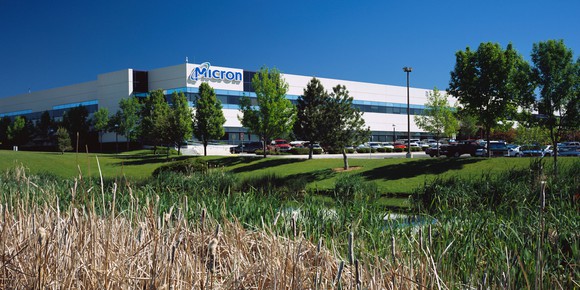
The biggest piece of news to come out of Micron Technology's (NASDAQ:MU) May 21 analyst and investor event was a massive $10 billion share buyback program. Starting in September, the memory chip manufacturer plans to transition from debt reduction to capital returns, aiming to use at least 50% of its free cash flow to scoop up its own shares.

This buyback announcement struck me as odd, because it was just seven months ago that Micron was doing the exact opposite. The company sold about $1.2 billion of shares in a public offering in October, with most of the proceeds going toward paying down debt. Those shares were sold for $41 each, far below the current market price of nearly $60.

A Micron facility in Boise, Idaho.

Image source: Micron.

An about-face

Micron sold 29.3 million shares in October, raising $1.19 billion. The company used that money as part of a $2.25 billion debt-reduction plan, redeeming its 7.5% senior secured notes and 5.25% senior notes, both due in 2023.

This was probably a smart move. At the time, Micron had nearly $10 billion of total debt and about $5.4 billion of cash, cash equivalents, and short-term investments. The stock had soared nearly 150% over the previous year, driven by surging prices for the company's DRAM memory chips. The memory chip industry is cyclical, going through booms and busts. Micron using its elevated stock price to pay down debt when times are good makes a lot of sense.

What makes less sense, at least to me, is turning around seven months later, with the stock substantially higher, and announcing a giant share buyback program. This move reflects some extreme optimism on the part of management. Reading through the company's analyst day presentation, it's as if management isn't even entertaining the possibility of a downturn. Ever. They're projecting things out to 2021, and in some cases 2025, despite the company's poor record of forecasting industry conditions.

They'll either be very right, or very wrong.

What could derail Micron?

Micron's management is arguing that there are structural changes in the memory chip industry that will prevent the kind of wild swings in demand that plagued the company in the past. Demand for memory chips for use in data centers, self-driving cars, and the Internet of Things, along with stable supply growth, are expected to keep prices high and Micron's profits fat. If you believe that, buying back $10 billion of stock makes sense.

What could go wrong? A lot of things. Supply could ramp up at some point down the road as competitors try to steal away market share or simply take advantage of high prices. Analysts at Gartner are predicting a supply-induced downturn in 2019 driven by new capacity and China's entry into the market. Of course, Gartner is no more likely to be right about market conditions next year than Micron. But a slump in prices certainly isn't out of the question.

Demand could also fall short of expectations. Micron expects cloud data center annual capital investments to more than double by 2021 to $108 billion, driven in part by increasing demand for artificial intelligence workloads. Micron sees AI-capable servers growing from a tiny fraction of the server market to nearly half by 2025.

Those estimates will almost certainly be wrong, because forecasting anything related to technology seven years in the future is little more than guessing. Micron is also projecting that fully autonomous vehicles will require 74 GB of DRAM and 1 TB of NAND per vehicle by 2025, with 26 million vehicles equipped with Level 3 autonomy or higher shipping by that year. Maybe, but also maybe not.

Optimism can be dangerous

Overoptimism about future sources of demand is exactly what causes oversupply, leading to plunging prices and vaporized profits. Micron's massive buyback program comes at time when the company is enjoying one of its strongest periods on record. It's betting that this period won't end, going against the entire history of the industry.

Micron could be right. Maybe something has changed about the memory chip industry. Maybe spending $10 billion on buybacks, seven months after selling shares at a lower price, instead of paying down debt further will work out just fine. But that's certainly not a bet I'm willing to make.

Monday, May 21, 2018

3 High-Yield Stocks Still Worth Buying

Often a high yield is an indication of a stock that's facing some sort of trouble -- but not always. If you take the time, you can find high-yield stocks worth buying if you look in the right places. For example, decidedly low-tech�Lamar Advertising Company (NASDAQ:LAMR), beaten-up midstream player�Magellan Midstream Partners, LP�(NYSE:MMP), and renewable power-focused TerraForm Power, Inc. (NASDAQ:TERP) come from vastly different industries. However, each of these high-yield stocks has a solid business and good growth prospects.

Not all advertising is going online

Chuck Saletta (Lamar Advertising): A key premise of advertising is that you want to reach people where they are, when they're there. These days, many advertisers are going online to reach people on the internet or their mobile phones as entertainment shifts to digital forms. Still, the one place where the digital world isn't likely to replace existing forms of advertising is the open road. That's where Lamar Advertising, a real estate investment trust (REIT) that specializes in billboard advertisements, shines.

The word yield spelled out with dice sitting atop stacks of coins

Image source: Getty Images

As a REIT, Lamar Advertising is required to pay out at least 90% of its income as a dividend. That assures that as long as it remains profitable, it will pay a dividend and will likely have a fairly high yield. Its current yield is around 5.7%, and it recently increased its quarterly dividend by around 9.6% to $0.91 a share. Its dividend is generally well covered by its operating cash�flows, giving investors reason to believe those dividends can continue.

Analysts expect Lamar Advertising to be able to continue to grow its earnings by around 3% annualized over the next five or so years. While that's not exactly the fastest anticipated growth around, it should be enough to keep up with the currently expected inflation rate.�Combine that modest growth with its hefty yield, and investors buying today have the potential for a decent total return over time.

Down, but not out

Reuben Gregg Brewer (Magellan Midstream Partners LP): The midstream oil and gas sector isn't feeling the love from investors today, with the Alerian MLP Index down roughly 45% from its 2014 highs. The pain hasn't been quite that bad at Magellan, which is down just 20% from its 2014 peak.

Some midstream players have gotten themselves into trouble (often leading to distribution cuts) by taking on too much debt in a quest for growth. But the negative industry sentiment pushing Magellan's shares lower really doesn't have much to do the partnership's performance. In fact, Magellan's business has held up quite well, allowing it to raise its distribution every single quarter since it came public in 2001 -- notably including every quarter since the 2014 pricing peak for the sector. As for leverage, Magellan's debt-to-EBITDA ratio sits near the bottom of the industry.�It remains as conservatively run today as it has been throughout its history.� �

MMP Financial Debt to EBITDA (TTM) Chart

MMP Financial Debt to EBITDA (TTM) data by YCharts.

The future looks fairly bright, as well. Magellan has plans to spend $1.4 billion on growth projects in 2018 and 2019. The projects have customers already lined up or are at facilities where demand shows a need for expansion. This spending is expected to lead to distribution growth of 8% this year and between 5% and 8% in 2019 and 2020. Distribution coverage, meanwhile, is projected to remain a robust 1.2 times. With a high 5.7% yield, Magellan is still worth buying, even if the broader midstream space is struggling today.� �

A dividend powered by the wind and sun

Travis Hoium (TerraForm Power): Renewable energy is the fastest-growing form of new energy worldwide, and yieldcos like TerraForm Power play a key role in making wind and solar developments possible. The company buys projects from developers, financing them with cash on the balance sheet or by issuing a combination of debt and equity. As assets are accumulated, they add to the cash available for distribution, which funds the dividend's ongoing payment as well as long-term growth.�

TerraForm Power currently has 2,606 megawatts (MW) of projects on its balance sheet with an average of 14 years left on their contracts to sell electricity to customers, ensuring a long-term stream of cash. It also has the benefit of having the backing of Brookfield Asset Management, which is the company's controlling shareholder and ensures the yieldco can grow its asset base and dividend in the long term. Brookfield acts like a backstop when acquiring projects, making sure the cost of debt or equity isn't too high, assuring that any acquisition will help grow the dividend. It already did that with the proposed acquisition of Saeta Yield, where Brookfield fully backstopped the $400 million equity offering.�

All of the wind and solar projects generating cash flow each year ultimately pay dividends, and the payout currently stands at $0.19 per share quarterly, or a yield of 6.8% annually. Given the growth and high predictability of wind and solar energy projects, plus the backing of a financing power like Brookfield Asset Management, I think TerraForm Power is a great high-yield dividend in the energy market, and it can ride the industry's growth for years to come.�